This is the French Archive Page

  • No categories

Mama Lisa Facebook Badge
Mama Lisa MySpace Badge
Mama Lisa Twitter Badge
  • My Tweets

  • Blog: We Now Have 100 Languages on Mama Lisa’s World! - http://tinyurl.com/yfnm6re Visit
  • Blog: Can Anyone Help with a Czech or Slovak Kids Song? - http://tinyurl.com/ygeku5m Visit
  • Blog: Does Anyone Know a Song with the Line, “The Ship Sailed for the White Cliffs of Dover”? - http://tinyurl.com/yzb8vhm Visit
  • Blog: Can Anyone Help with a Korean Kids Song? - http://tinyurl.com/yjyklqk Visit
  • Check out Frere Jacques - Brother John a cool recording of the Song in French and English all... http://bit.ly/3O3USK Visit
  • Archive for the 'French' Category

    Contents

    Tapent, tapent, petites mains – Clap, Clap, Little Hands – A French Pat-a-cake Song with a YouTube Video

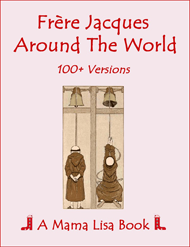
    Frere Jacques – Brother John with an MP3 Recording in French and English

    A Good Morning Song Featuring African Languages with an MP3

    Two French Goodbye Songs with Recordings

    Recipe for Bavarian Fruit

    French Hello Song “Bonjour” with MP3

    The Online Children’s Book, "Our Children" ("Les enfants") by Anatole France

    Radio France Podcasts

    Does Anyone Know Any Haitian Nursery Rhymes?

    2 French Tongue Twisters with a YouTube Video with Translations

    Can Anyone Help with a Scary French Lullaby?

    Can Someone Help with a French Song about a Doll?

    Wedding Custom and Song in Occitan from France

    French and Occitan Christmas Carol Links

    Patapan – The French Christmas Carol with a YouTube Video

    The Itsy Bitsy Spider Around the World

    The Conquerors – A French Poem about Columbus’ Voyage

    Does Anyone Have the Sheet Music to “Joyeux Enfants de la Bourgogne”?

    New Songs Posted

    Multicultural Songs about the Seasons

    Posts

    Tapent, tapent, petites mains – Clap, Clap, Little Hands – A French Pat-a-cake Song with a YouTube Video

    Friday, November 20th, 2009

    We were just noticing how Pat-a-cake songs seem to be universal. Perhaps they help teach children to use their hands…

    Tapent, tapent, petites mains
    Tourne, tourne, joli moulin,
    Nage, nage, gentil poisson
    Vole, vole papillon

    Clap, clap, little hands,
    Turn, turn, pretty mill,
    Swim, swim, nice fish,
    Fly, fly, butterfly!

    Feel free to share a Pat-a-cake song from your country in the comments below or by emailing me.

    Cheers!

    Mama Lisa

    Share on Facebook and other services:
    • Facebook
    • Twitter
    • MySpace
    • Digg
    • del.icio.us
    • Print this article!
    • E-mail this story to a friend!

    Frere Jacques – Brother John with an MP3 Recording in French and English

    Saturday, November 14th, 2009

    Illustration of Frere Jacques

    Here’s a nice recording of Frère Jacques in both French and English by Ezwa.

    Here are the lyrics of the French and English versions of Frère Jacques. The version on the mp3 recording mixes these lyrics…

    Frère Jacques,
    Frère Jacques,
    Dormez-vous?
    Dormez-vous?
    Sonnez les matines.
    Sonnez les matines.
    Ding, ding, dong.
    Ding, ding, dong.

    Are you sleeping?
    Are you sleeping?
    Brother John,
    Brother John?
    Morning bells are ringing.
    Morning bells are ringing.
    Ding, dong, ding.
    Ding, dong, ding.

    Enjoy!

    Mama Lisa

    Share on Facebook and other services:
    • Facebook
    • Twitter
    • MySpace
    • Digg
    • del.icio.us
    • Print this article!
    • E-mail this story to a friend!

    A Good Morning Song Featuring African Languages with an MP3

    Monday, October 26th, 2009

    I woke up this morning with a cup of coffee and by listening to “Good Morning to You” in English, French and some African languages on my computer. What a wonderful way to wake up!

    The recording was done by recording a phone call over the internet. Thanks to Nyango Melissa for calling and singing this morning! She made my day! Now you can enjoy her singing too! Just click the mp3 link below and read along with the lyrics. Enjoy!

    MP3 of Good Morning to You

    Good Morning to You
    (In English, French, Hausa, Mbonge & Swahili)

    Good morning to you,
    Good morning to you,
    In English, I speak
    In English, I speak
    Good morning to you,
    Good morning to you,
    In English, in English I speak.

    Bonjour Mesdames,
    Bonjour Messieurs,
    En français, je parle
    En français, je parle
    Bonjour mesdames, bonjour messieurs
    In French, in French I speak.

    Salam alekum
    Alekum sala
    In Hausa, I speak
    In Hausa, I speak
    Salam alekum
    alekum sala
    In Hausa, in Hausa I speak.

    O-we-li-ni-e
    O we li ni e
    In Mbonge, I speak
    In Mbonge, I speak
    O we li ni e
    O we li ni e
    In Mbonge, in Mbonge I speak.

    Hujambo bwana,
    Hujambo bibi
    In Swahili, I speak
    In Swahili, I speak
    Hujambo bwana
    Hujambo bibi
    In Swahili, in Swahili I speak!

    It’s the 2nd time we were able to easily use this technology of recording a phone call. If anyone else would like to sing a traditional (non-copyrighted) song for us, or recite a rhyme, please email me at lisa@mamalisa.com for directions.

    Nyango has sent us many songs from Cameroon over the past couple of years. It’s great for everyone to finally hear her voice! She recorded 6 songs today. You can find them on the Cameroon Pages at the link just above. They’re the ones with the MP3’s.

    Many thanks to Nyango Melissa Nambangi of the Minnesota African Women’s Association for contributing and singing these songs for us!

    Mama Lisa

    *****

    Minnesota African Women’s Association has products available that were stitched by their sewing group. They’re available for purchase online at Etsy. They have beautiful pillows, dolls dressed in traditional and contemporary African fashions, tote bags, hats and more!

    Share on Facebook and other services:
    • Facebook
    • Twitter
    • MySpace
    • Digg
    • del.icio.us
    • Print this article!
    • E-mail this story to a friend!

    Two French Goodbye Songs with Recordings

    Friday, October 23rd, 2009

    I was recently asked for a Goodbye Song in French. While looking for a song I found out that some French school teachers use the French version of Auld Lang Syne, “Ce n’est qu’un au revoir”, as a Goodbye Song. It’s a Scout song that’s also called “Le chant des adieux”. When teachers use it as a Goodbye song, they sing the 1st two verses. Here they are in French with an English translation….

    Faut-il nous quitter sans espoir
    Sans espoir de retour ?
    Faut-il nous quitter sans espoir
    De nous revoir un jour ?

    Refrain
    Ce n’est qu’un au revoir, mes frères,
    Ce n’est qu’un au revoir.
    Oui, nous nous reverrons, mes frères,
    Ce n’est qu’un au revoir.

    Here’s a literal English translation by Monique Palomares…

    Must we leave each other without a hope
    To see each other again some day
    Must we leave each other without a hope
    A hope of return

    It’s only a goodbye, my brothers
    It’s only a goodbye,
    Yes, we’ll see each other again, my brothers
    It’s only a goodbye.

    Here you can hear the whole song…

    Another Goodbye Song we have here today was written and sung by Alain Le Lait. It’s in French and English. Sit back and enjoy the song by clicking the MP3 below. You can read along with the lyrics in French and English…

    Listen to Alain’s French Goodbye Song

    Au revoir
    by Alain Le Lait

    Au revoir, good bye,
    Now it is time for me to go away.
    Au revoir, good bye,
    But I wish I could stay with you all day.

    Thanks for your smiles
    And for singing along
    I hope to see you again before too long.

    Au revoir, good bye,
    Il se fait tard et je dois m’en aller
    Au revoir, good bye,
    Mais j’aimerais rester toute la journée
    Pour vos sourires et vos bien jolies voix
    Je vous remercie et a une autre fois.

    Au revoir, good bye,
    Au revoir, good bye,
    Au revoir, good bye.

    (English Translation of French Verse)

    Good bye, good bye
    It’s getting late and I must go
    Good bye, good bye
    But I’d like to stay with you all day
    For all your smiles and your pretty voices
    I thank you and I’ll see you another time.

    The French and English lyrics to this “Au revoir” song are © 1994 Alain Le Lait.

    Alain Le Lait is a French native who grew up near Paris, France. He moved to the United States in the 1970s and now lives in Colorado. Alain writes and performs easy to learn children’s songs in French, Spanish and English. Check out his site www.Yadeeda.com to hear samples of his music and to buy his CD’s or mp3’s.

    Merci Alain & Monique!

    Feel free to share any French Hello or Goodbye songs you know in the comments below.

    Mama Lisa

    PS Here are some other Hello and Goodbye Songs…

    Share on Facebook and other services:
    • Facebook
    • Twitter
    • MySpace
    • Digg
    • del.icio.us
    • Print this article!
    • E-mail this story to a friend!

    Recipe for Bavarian Fruit

    Saturday, July 25th, 2009

    Monique Palomares, who works with me on the French version of Mama Lisa’s World, sent me this blog post and recipe from France…

    image

    This morning, I made a full cake pan of "bavarois aux fruits" (Bavarian Fruit) for this evening…  it’s an easy and cool recipe to make for the summer:

    1 liter (4 cups) Fruit Juice of your choice (except pineapple, kiwi fruit, papayas, peaches, mangos, guavas, and figs because the gelatin won’t set due to certain enzymes in these juices.)

    6 Gelatin Sheets (4 sheets equal the amount of gelatin in the 1/4-ounce packet of Knox powder gelatin found in the US – therefore in the US you’d need 1 1/2 -1 envelopes which should be 2 Tablespoonfuls.)

    2 Egg Whites

    20cl (7 ounces) Heavy Cream

    150g Sugar (2/3 cup)

    Vanilla-flavored Sugar (in France it’s in 7.5 grams poaches, but I think a couple of drops of Vanilla Extract should do) (Optional)

    1) Dip the gelatine sheets in cold water if you’re using sheets.  Otherwise, if you’re using powder, mix the gelatin powder with the juice.  Warm the fruit juice on the stovetop on low. (If you’re using the gelatine sheets add them at this point into the tepid/warm fruit juice).  Do not boil the juice or it will ruin the consistency of the gelatin! Stir until gelatin is dissolved – this should take a few seconds.

    2) Allow to cool then put in the fridge long enough for it to be half set.  When it is, beat the two eggs whites in a separate bowl until stiff, add the sugar.  Whip the cream in a separate bowl until foamy and stiff and add the vanilla extract. Gently add both mixtures to the half set mixture of juice/gelatin.  It’s better done with a whisk.  Pour the mixture into a glass pie dish.  My cake pan is 12" in diameter and about 3" high (7cm).  Put it in the fridge to set… and voila!

    Beware, if you leave it too long outside at dessert time, it’ll somewhat melt,  it’ll look like a mess you’ll need to use a ladle!

    Enjoy!

    Monique

    Note from Mama Lisa: I asked Monique about the consistency of the dessert and she said, "It’s less thick than Jell-O. It’s more or less the consistency of a mousse, but maybe a little more set. So you must serve it as soon as you take it out of the fridge. Then you can cut it and serve it with a cake server."

    Share on Facebook and other services:
    • Facebook
    • Twitter
    • MySpace
    • Digg
    • del.icio.us
    • Print this article!
    • E-mail this story to a friend!

    French Hello Song “Bonjour” with MP3

    Monday, June 8th, 2009

    Hello songs are a wonderful way to help children who are learning a foreign language. It’s also nice for children to always sing the same song at the beginning of a class. Hello songs are great for this.

    The song below is called “Bonjour”. It’s a French hello song written and sung by Alain Le Lait. Sit back and enjoy the song by clicking the MP3 below. You can read along with the lyrics in French, followed by an English translation by Alain…

    MP3 of Bonjour

    Bonjour
    (French Lyrics)

    Bonjour, bonjour
    Comment ça va?
    Bonjour, bonjour
    Très bien, merci
    Je suis content d’être ici
    Avec tous mes petits amis
    Bonjour, bonjour
    Comment ça va?

    Merci, merci
    Merci d’être ici
    Merci, merci
    Écoutez
    Aimez-vous cette chanson?
    J’espère que je suis dans le ton
    Merci, merci
    Merci d’être ici

    Hello
    (English Translation)

    Hello, hello
    How are you?
    Hello, hello
    Very well, thank you
    I am happy to be here
    With all my little friends
    Hello, hello
    How are you?

    Thank you, thank you
    For being here
    Thank you, thank you
    Listen up
    Do you like this song?
    I hope that I am in tune
    Thank you, thank you
    For being here.

    The French and English lyrics to this “Bonjour” song are © 2003 Alain Le Lait.

    Alain Le Lait is a French native who grew up near Paris, France. He moved to the United States in the 1970s and now lives in Colorado. Alain writes and performs easy to learn children’s songs in French, Spanish and English. Check out his site www.Yadeeda.com to hear samples of his music and to buy his CD’s or mp3’s. Soon we’ll be posting Alain’s version of Alouette!

    Merci Alain!

    Mama Lisa

    PS Here are some other Hello and Goodbye Songs…

    Share on Facebook and other services:
    • Facebook
    • Twitter
    • MySpace
    • Digg
    • del.icio.us
    • Print this article!
    • E-mail this story to a friend!

    The Online Children’s Book, "Our Children" ("Les enfants") by Anatole France

    Thursday, May 7th, 2009

    Project Gutenberg just released an online version of Anatole France’s book "Les enfants" in English.  It’s called "Our Children", which is a collection of little stories for kids.  It has some lovely illustrations.

    I read a couple of stories from it to my daughter yesterday and she enjoyed them.  The book is from around 1886.  So I think it was interesting for her to see how they lived then.  The first story, Fanny, is about a little girl visiting her grandmother.  Her grandmother cooks by the hearth and the little girl carries a pocket knife to cut her food.  It’s very quaint!  Here are some of my favorite illustrations from the story.

    image

    image

    Some of the stories have ideas that we might find a bit different in today’s day and age.  There’s the story called The School. It starts out with an interesting idea, even if the way these children comport themselves in school would be stiff by today’s standards – at least in the US…

    I declare I believe Miss Genseigne’s school is the best school for girls anywhere in the world. I maintain that those who believe and say the contrary are false and misleading. All Miss Genseigne’s scholars are well-behaved and diligent. There is nothing so pleasant as to see them, with their little stiff bodies and their heads so erect. You would say they were so many little bottles into which Miss Genseigne was pouring knowledge.

    It’s the illustration that goes with this idea that’s so great…

    image

    The last story in the book is called The Little Sea Dogs.  It’s about children whose relatives are sailors.  They’re waiting for them to return from sea. 

    image

    This story reminds us of how much harder life was in those times.  It ends by discussing the fickleness of the weather.  A storm can capsize a ship, leaving women widowed.  Sad ending, but it’s important for children to know that we generally live in a safer, more comfortable world than ever before.

    image

    The book Nos enfants is online in French too.  I found that one a bit difficult to navigate. Perhaps it might be easier to check out the text only version of Nos enfants in combination with the English version that has the illustrations.

    Enjoy!

    Mama Lisa

    Share on Facebook and other services:
    • Facebook
    • Twitter
    • MySpace
    • Digg
    • del.icio.us
    • Print this article!
    • E-mail this story to a friend!

    Radio France Podcasts

    Saturday, March 14th, 2009

    image

    Radio France has French news podcasts that are spoken a little slower than normal for people who don’t speak French as a first language.  I found them reasonable to understand.  Check it out if you know some French and would like to practice!

    If you’re fluent in French, up to a challenge, or just want to listen to their music, check out Radio France’s podcast directory page, featuring music and news.

    Share on Facebook and other services:
    • Facebook
    • Twitter
    • MySpace
    • Digg
    • del.icio.us
    • Print this article!
    • E-mail this story to a friend!

    Does Anyone Know Any Haitian Nursery Rhymes?

    Friday, March 6th, 2009

    Keyanne Jacob wrote:

    I am preparing to go to teach school in Haiti. I want to teach nursery rhymes. Are there many Haitian nursery rhymes? If so where can I find them?

    My impression is that there are traditional Haitian lullabies and folk songs, but that the nursery rhymes in Haiti are based on the traditions from other countries – such as France and England (though I could be wrong).

    If anyone knows of any Haitian nursery rhymes (even if they’re based on rhymes from other countries), please share them in the comments below.

    Thanks in advance!

    Mama Lisa

    Share on Facebook and other services:
    • Facebook
    • Twitter
    • MySpace
    • Digg
    • del.icio.us
    • Print this article!
    • E-mail this story to a friend!

    2 French Tongue Twisters with a YouTube Video with Translations

    Wednesday, March 4th, 2009

    These tongue twisters were recited by François Martini, who gives the instructions: “À dire très vite” (To say very quickly). Below the video, you’ll find the tongue twisters written in French with their English translations…

    “Un chasseur sachant chasser sait chasser sans son chien.”
    (A hunter knowing how to hunt knows how to hunt without his dog.)

    “Rat vit rôt, rôt tenta rat, rat mit patte à rôt, rôt brûla patte à rat, rat secoua patte et quitta rôt.”
    (Rat saw a roast, roast tempted rat, rat put leg to roast, roast burnt rat’s leg, rat shook leg and left roast.)

    Thanks to Monique Palomares of Mama Lisa’s World en français for help with the rat translation and to François Martini for his recitation!

    Share on Facebook and other services:
    • Facebook
    • Twitter
    • MySpace
    • Digg
    • del.icio.us
    • Print this article!
    • E-mail this story to a friend!

    Can Anyone Help with a Scary French Lullaby?

    Thursday, January 29th, 2009

    Etiennette was looking for help with a French lullaby:

    I was wondering if anyone knew the complete lyrics to a lullaby my mother would sing to me and then to my children. I only remember a few, it’s a bit scary. Maybe that’s why I don’t remember too much. Here it goes…

    Entendez-vous dans la pleine,
    Un bruit venent jusqu’a nous
    On dirait un bruit de chenes, (blank, blank)
    C’est le lustucru qui passe (dah dah dah)
    Allez-vous-en méchant homme – - – -
    car ils font un petit songes,
    Non vous n’aurai pas mes deux petit gars,
    Lo-la lo-la tirala lo la.

    Etiennette Tosches

    If anyone can help, please comment below.

    Thanks!

    Mama Lisa

    Share on Facebook and other services:
    • Facebook
    • Twitter
    • MySpace
    • Digg
    • del.icio.us
    • Print this article!
    • E-mail this story to a friend!

    Can Someone Help with a French Song about a Doll?

    Saturday, January 24th, 2009

    Gérard only remembers the beginning of a song that goes…

    “Maman, il est temps de coucher ma poupée, pauvre petite, elle a l’air fatiguée… ”

    In English that would be something like, “Mom, it is time to put my doll to bed, poor baby, she looks tired..”

    Would anyone know this song he heard in the late 40’s? If you can, please let us know about it in the comments below.

    Thanks!

    Mama Lisa

    Share on Facebook and other services:
    • Facebook
    • Twitter
    • MySpace
    • Digg
    • del.icio.us
    • Print this article!
    • E-mail this story to a friend!

    Wedding Custom and Song in Occitan from France

    Thursday, January 8th, 2009

    Guest blogger, Monique Palomares works with me on Mama Lisa’s World en français. Monique grew up speaking the Occitan language in southern France. Occitan was the language spoken by the troubadours – largely in southern France – but also in parts of Spain and Italy.

    Photo of French Wedding Chamberpot

    Recently, Peter emailed us asking about the lyrics of a Gascon Occitan song called “Lo torrin”. (Gascon is an Occitan Dialect.) Peter’s wife is learning how to play the “boha” (the Gascon bagpipe) and he wanted to sing along. He got the lyrics and forwarded them to us.

    The song “Lo torrin” is a “wedding song” that the wedding party-goers would sing to the newlyweds. “Lo torrin” specifically refers to a garlic soup spiced with pepper. This soup was traditionally brought to newlyweds on the morning after their wedding night.

    In this old tradition, the bride and the groom would ride around the village in a cart with their brand-new chamberpot, on their wedding day. It symbolized the start of their new life together and it also let people know about their wedding. Remember that at that time there were no bathrooms, only outhouses. Yet people wouldn’t go out at night to “go” in the outhouse (”la cabane au fond du jardin”*). During the evening meal and party the newlyweds would sneak out around midnight and they would go to sleep at some accomplice’s place (an aunt’s, a grandma’s…). Later in the night or early in the morning, the young people at the wedding (those in their late teens and their twenties) would search for them. When they found them, they’d get them out of bed so that they could eat the soup that had been cooked especially for them.

    In some areas, they wouldn’t cook a soup, they would pour into a brand new chamberpot the leftovers of the drinks with chocolate and biscuits (nobody needs further description to guess what it was supposed to look like). This was supposed to help them recover from the wedding night.

    When I was a child and in my neighborhood the bride and groom wouldn’t tour around the town with their brand-new chamberpot, but they’d still be gotten out of bed. Nowadays the tradition survives in some places. Since nobody now uses chamberpots, “pots de la mariée” (brides’ chamberpots) are still on sale for this event.

    *”La cabane au fond du jardin” refers to the little wooden cabin used as toilets at the other end of the garden and it’s also the title of a spoof song imitating the style of the French singer Francis Cabrel.

    Below, you can hear Jane Thomasson playing the “boha” and Peter Horton singing the first verse of the song. After that you’ll find the lyrics in Occitan, and then an English translation…

    Click to Hear the first verse of Lo Torrin

    Lo torrin
    (Gascon Occitan)

    Obritz la pòrta, obritz (x2)
    La novèla maridada luron lonla (x2)

    Vos portèm lo torrin (x2)
    E la sopa ben pebrada luron lon la (x2)

    Coma obrirei jo (x2)
    Que soi dens mon lheit cochada luron lon la (x2)

    Au pròche de mon marit (x2)
    Que me ten tota embraçada luron lon la (x2)

    Que me ten e me tendrà (x2)
    Tota la nèit empenada luron lon la (x2)

    Se perdèvi mas amors (x2)
    Ont las anguerei o quèrre luron lon la (x2)

    Seren per debat París (x2)
    A dus cent cinquanta legas luron lon la (x2)

    Dabans la pòrta i a (x2)
    Un grand pè de heuguèra luron lon la (x2)

    Dens ‘quera heuguèra (x2)
    Un beròi nid de tortèla luron lon la (x2)

    La tortèla i a cohat (x2)
    E apèi s’es envolada luron lon la (x2)

    En partint a feit rocó (x2)
    E la bèra n’es plus bèra luron lon la (x2)

    Obritz la pòrta, obritz (x2)
    La novèla maridada luron lon la (x2)

    Se no l’obrissètz pas (x2)
    En ‘questa ora vos l’enfoncèm luron lon la (x2)

    The “Torrin”
    (English Translation)

    Open the door, open it, (2 x’s)
    You, bride (newlywed) luron lon la…

    We bring you the tourrin*
    And the soup spiced with pepper.

    How would I open it
    If I’m lying in my bed?

    Close to my husband,
    Who holds me in his arms**.

    Who holds me and will hold me
    Saddened, all night long.

    If I lost my love
    Where would I go for him?

    He’d be, northwards, near Paris,
    250 leagues from here.

    In front of the door is
    A big fern.

    In this fern is
    A pretty turtle dove nest.

    The turtle dove hatched there
    Then she flew away.

    When she left, she went “coo”,
    And the pretty one isn’t pretty any more.

    Open the door, open, (twice)
    You, bride.

    If you don’t open it
    Now we’ll break it open.

    Click here for the Lo torrin Song Page – where you can access the Sheet Music, midi tune and French and Spanish translations.

    Note: There are some other songs about getting married in Occitan and French, most of which are addressed to girls. They’re along the lines of Joan Baez’s song The Wagoner’s Lad: “Oh hard is the fortune of all womankind, she’s always controlled, she’s always confined, controlled by her parents until she is wife, a slave to her husband the rest of her life!”

    Many thanks to Peter Horton for contributing the lyrics to “Lo torrin”and the sheet music (which came from the “Bohaires de Gasconha”), and for singing the first verse for us, accompanied by Jane Thomasson playing the “boha” (local bagpipe).

    -Monique Palomares

    UPDATE: Here’s a Recipe for Lo Torrin Soup!

    Share on Facebook and other services:
    • Facebook
    • Twitter
    • MySpace
    • Digg
    • del.icio.us
    • Print this article!
    • E-mail this story to a friend!

    French and Occitan Christmas Carol Links

    Tuesday, December 23rd, 2008

    Here are some Carols you can find the lyrics and translations to and often an mp3, midi, score, YouTube video and French and Spanish Translations – just click the link to access them:

    Occitan Christmas Carols

    Nadal tindaire – Jingling Christmas – from Occitania
    Nadal tindaire – Jingling Christmas – Recording only – from Occitania

    Pastres, rintratz vòstrei tropèus – Shepherds, Bring Your Flocks In – Occitania
    Lo paure Satan – Poor Satan – Occitania

    French Christmas Carols

    Nous étions trois bergerettes – We Were Three Young Shepherdesses – France
    Patapan – France
    Willie Take Your Little Drum – English Version of the French Carol Called Patapan

    Enjoy!

    Mama Lisa

    Share on Facebook and other services:
    • Facebook
    • Twitter
    • MySpace
    • Digg
    • del.icio.us
    • Print this article!
    • E-mail this story to a friend!

    Patapan – The French Christmas Carol with a YouTube Video

    Sunday, December 7th, 2008

    Patapan is one of the most popular French Christmas songs. I’ve posted Patapan before with an mp3 recording. I thought it was worthwhile to repost it for the holiday season with another rendition – this time from YouTube.

    Patapan, or Guillaume prends ton tambourin, is a traditional song from the Burgundy region in France. It’s also known in English as Willie Take Your Little Drum. It was written by Bernard de la Monnoye (1641-1728) around 1700. Monnoye wrote many other Burgundian carols around the same time.

    A tambourin is a small cylindrical drum, usually made out of wood and covered with an animal skin. It’s hung from the shoulders and played with the hands. ‘Turelurelu’ is the sound the flute makes and ‘patapatapan’ is the sound of the drum. This is most likely the inspiration for the English Christmas song, The Little Drummer Boy.

    Below you’ll find a YouTube video rendition of Patapan in French (it cuts off slightly at the end – yet it’s worth watching). It’s followed by the French lyrics, an English translation and then the original Burgundian version…

    Performed by “Choir Ars XXI”

    Patapan
    (French)

    Guillaume prends ton tambourin
    Toi, prends ta flûte, Robin;
    Au son de ces instruments
    Turelurelu, patapatapan
    Au son de ces instruments
    Je dirai Noël gaîment.

    C’était la mode autrefois
    De louer le Roi des rois
    Au son de ces instruments
    Turelurelu, patapatapan
    Au son de ces instruments
    Il nous en faut faire autant.

    L’homme et Dieu sont plus d’accord
    Que la flûte et le tambour;
    Au son de ces instruments
    Turelurelu, patapatapan
    Au son de ces instruments
    Chantons, dansons, sautons en!

    Here’s a fairly literal English translation of the original Patapan song…

    Willie Take Your Little Drum
    (English)

    Willie take your little drum,
    Robin take your flute, come!
    To the sound of these instruments
    Tu-re-lu-re-lu, pat-a-pat-a-pan,
    To the sound of these instruments
    I will joyfully sing Merry Christmas!

    It was the way of yonder times
    To praise the king of kings
    To the sound of these instruments
    Tu-re-lu-re-lu, pat-a-pat-a-pan,
    To the sound of these instruments
    We must do the same.

    Man and god agree
    About the flute and the little drum…
    To the sound of these instruments
    Tu-re-lu-re-lu, pat-a-pat-a-pan,
    To the sound of these instruments
    Sing! Dance! Jump around!

    Here’s Patapan in the old Burgundian dialect, which has an additional verse (#3)…

    Guillô, pran ton tamborin
    (Burgundian Dialect)

    Guillô, pran ton tamborin;
    Toi, pran tai fleúte, Rôbin!
    Au son de cé instruman,
    Turelurelu, patapatapan,
    Au son de cé instruman
    Je diron Noei gaiman

    C’ étó lai môde autrefoi
    De loüé le Roi dé Roi,
    Au son de cés instruman,
    Turelurelu, patapatapan,
    Au son de cés instruman,
    Ai nos an fau faire autan.

    Ce jor le Diale at ai cu
    Randons an graice ai Jesu
    Au son de cés instruman,
    Turelurelu, patapatapan,
    Au son de cés instruman,
    Fezon lai nique ai Satan.

    L’homme et Dei son pu d’aicor
    Que lai fleúte & le tambor.
    Au son de cés instruman,
    Turelurelu, patapatapan,
    Au son de cés instruman,
    Chanton, danson, sautons-an.

    There’s a popular English version of Willie Take Your Little Drum that I posted with English renditions of the song – come check it out! You can also check out the blog of the “Choir Ars XXI” to hear more of their wonderful recordings and watch videos of them performing!

    Mama Lisa

    Share on Facebook and other services:
    • Facebook
    • Twitter
    • MySpace
    • Digg
    • del.icio.us
    • Print this article!
    • E-mail this story to a friend!

    The Itsy Bitsy Spider Around the World

    Monday, October 13th, 2008

    Shirley emailed me looking for different versions of The Itsy Bitsy Spider. Here’s what she wrote:

    I am desperately seeking 3-4-5 versions (songs) of Itsy Bitsy Spider for an around the world float.

    Shame on me I left that chore until last and now I am having trouble. I’ve gotten English and Spanish. Please let me know if this is even remotely possible so I can make other arrangements.

    Thanks Shirley

    These are the ones we have on Mama Lisa’s World (you can click the link to get to the song page and to access the English, French and Spanish translations of the songs):

    Denmark – Lille Peter Edderkop – The Itsy Bitsy Spider
    Mexico – La pequeña araña – The Little Spider
    Mexico – Itzi, bitzi araña – The Itsy Bitsy Spider
    Philippines Ilongo – The Itsy Bitsy Spider – And Dutay Nga Damang
    Spain – Itsy Bitsy Spider – Araña arañita
    USA – The Itsy Bitsy Spider
    France – L’araignée Gypsy – The Gypsy Spider

    If you would like to share the version of The Itsy Bitsy Spider from your country, please feel free to post the lyrics in the comments below or email a recording to me.

    Thanks!

    Lisa

    Share on Facebook and other services:
    • Facebook
    • Twitter
    • MySpace
    • Digg
    • del.icio.us
    • Print this article!
    • E-mail this story to a friend!

    The Conquerors – A French Poem about Columbus’ Voyage

    Tuesday, October 7th, 2008

    In my last blog post, I mentioned how Columbus’ voyage is not always seen in a positive light. Earlier in the week, I had posted two poems that were positive towards Columbus (one called In 1492, Columbus Sailed the Ocean Blue and the other, a Spanish poem called To Christopher Columbus). Here’s one that is not so favourable. It was written by a Cuban-born French poet named José-Maria de Heredia (1842-1905).

    Monique Palomares of Mama Lisa’s World en français sent this poem to me. She learnt it in France in the 8th grade. Below you’ll find it in the original French, followed by an English translation done by Monique Palomares, Lisa Yannucci (yours truly) and Jason Pomerantz. Yes, this was a tough poem to translate! It took the three of us to finally come up with a version that was understandable, yet true to the original meaning. Hope you enjoy reading it (whatever your stand on Columbus is)…

    Les conquérants
    (French)

    Comme un vol de gerfauts hors du charnier natal,
    Fatigués de porter leurs misères hautaines,
    De Palos de Moguer, routiers et capitaines
    Partaient, ivres d’un rêve héroïque et brutal.

    Ils allaient conquérir le fabuleux métal
    Que Cipango* mûrit dans ses mines lointaines,
    Et les vents alizés inclinaient leurs antennes
    Aux bords mystérieux du monde Occidental.

    Chaque soir, espérant des lendemains épiques,
    L’azur phosphorescent de la mer des Tropiques
    Enchantait leur sommeil d’un mirage doré ;

    Ou penchés à l’avant des blanches caravelles,
    Ils regardaient monter en un ciel ignoré
    Du fond de l’Océan des étoiles nouvelles.

    The Conquerors
    (English Translation)

    Like a flight of gyrfalcons*, from the charnel house of their native land,
    Tired of bearing their haughty miseries,
    From Palos to Moguer**, captains and mercenaries
    Embarked, wild with a heroic and brutal dream.

    They voyaged to conquer the famous metal***,
    Produced by Japan**** in its distant mines,
    As trade winds stretched their tentacles
    Over the mysterious rim of the Western world.

    Every night, as they hoped for epic tomorrows,
    The phosphorescent blue sky of the Tropical sea
    Enchanted their sleep with a golden mirage;

    Leaning on the bows of the white caravels,
    They gazed on new stars rising in an unknown sky,
    From the far end of the Ocean.

    *A “gyrfalcon” is the largest breed of falcons. They’re from the Artic region. This word (gerfauts) is used in French for poetic reasons (it sounds exotic). The average French person doesn’t know about gyrfalcons unless s/he’s an ornithologist or learned this poem at school.
    **Palos is the port that Christopher Columbus departed from.
    Moguer is a Spanish town that helped prepare for Columbus’ trip.
    In the middle of the 16th century, some chroniclers who’d never been there thought Moguer and Palos were one only town while they’re actually two towns distant by 10km (about 6 miles). Other people didn’t check and used the name “Palos de Moguer” to mean the port Columbus departed from. This poem is an example of this confusion.
    ***Meaning ‘Gold’.
    ****In French it says “Cipango” (meaning the country of gold). It’s the first name Europeans gave to Japan. Japan was believed to have large amounts of gold.

    Share on Facebook and other services:
    • Facebook
    • Twitter
    • MySpace
    • Digg
    • del.icio.us
    • Print this article!
    • E-mail this story to a friend!

    Does Anyone Have the Sheet Music to “Joyeux Enfants de la Bourgogne”?

    Monday, September 15th, 2008

    Jean wrote:

    I am looking for the music to “Joyeux Enfants de la Bourgogne.” I already have the words. Does anyone know the musical notes. I could play them on my guitar if I had them. Many thanks. MJ Baney

    If anyone can help out Jean, please email me or comment below.

    Thanks!

    Lisa

    Share on Facebook and other services:
    • Facebook
    • Twitter
    • MySpace
    • Digg
    • del.icio.us
    • Print this article!
    • E-mail this story to a friend!

    New Songs Posted

    Thursday, August 28th, 2008

    Here are links to some of the new songs we’ve posted…

    The Ten Puppies – Los diez perritos - Spanish
    Scouts Alphabet – Alphabet des Scouts - French
    The Frog Cucu’s – La rana cucú – Spanish
    Where is Thumbkin? – English – with instructions to play
    Rubin, Rubin, I’ve Been Thinking (Jump Rope Version) – English

    Share on Facebook and other services:
    • Facebook
    • Twitter
    • MySpace
    • Digg
    • del.icio.us
    • Print this article!
    • E-mail this story to a friend!

    Multicultural Songs about the Seasons

    Wednesday, August 20th, 2008

    People often write me looking for songs about the four seasons, from around the world. Here are some! The links below take you to the different pages on Mama Lisa’s World of International Childrens Songs. There, you’ll find the lyrics in the original languages, with English translations.

    Songs about Winter

    Yuki (Snow) – Japanese
    A, a, a, der Winter, der ist da (A, a, a, Winter is Here) – German
    La neige tombe (The Snow is Falling) – French from Canada
    Zemestoon (Winter) – Persian from Iran
    Kış (Winter) – Turkish from Turkey

    Songs about Spring

    La Primavera (Springtime) – Spanish from Peru
    Haru Ga Kita (Spring Has Come) – Japanese
    De Colores (All the Colors) – Spanish from Mexico & Spain

    Songs about Summer

    Trarira, der Sommer, der ist da! (Tilitum, The Summer Has Come) – German

    Songs about Autumn or Fall

    Couleurs d’automne (Colors of Autumn) – French

    Songs or Rhymes about All Four Seasons

    Joereszäiten (Seasons) – Franconian from Lorraine Region in France
    Les feuilles (Leaves) – French from Canada

    When you get to the song pages you can access French and Spanish translations too, and in some cases mp3 recordings, midis and/or scores.

    Feel free to add a song about any of the seasons in the comments below or email me.

    Mama Lisa

    Share on Facebook and other services:
    • Facebook
    • Twitter
    • MySpace
    • Digg
    • del.icio.us
    • Print this article!
    • E-mail this story to a friend!

    ________

    Copyright ©2009 by Lisa Yannucci. All rights reserved.
    Advertisements